Narendra Modi sets record as longest-serving head of government in India
Narendra Modi becomes India’s longest-serving head of government, surpasses Pawan Kumar Chamling
- By Gurmehar --
- Sunday, 22 Mar, 2026
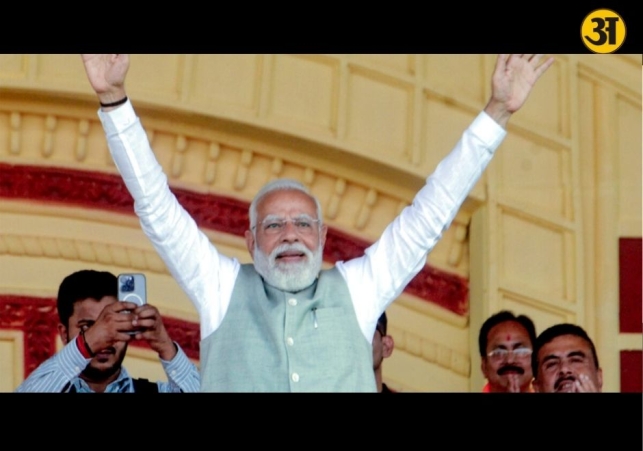
Prime Minister Narendra Modi has created history by becoming the longest-serving head of government in India. On March 22, 2026, he completed 8,931 days in office, going past the previous record held by Pawan Kumar Chamling. This record includes his time as Chief Minister of Gujarat as well as his years as Prime Minister.
This achievement is being seen as a major milestone in Indian politics. It reflects not only long-term leadership but also consistent public support over many years. Modi’s journey from a small-town background to the highest office in the country is often described as inspiring and unique.
Chamling, who served as Chief Minister of Sikkim for over 24 years, had held the record with 8,930 days in office. With this new milestone, Modi has now taken the top position, marking a new chapter in India’s political history.
Political journey
Narendra Modi’s political journey has been long and steady. He was born in Vadnagar, a small town in Gujarat, and came from a humble background. As a young boy, he helped his father sell tea at a railway station. Over time, he became involved in social and political activities through the Rashtriya Swayamsevak Sangh.
Later, he joined the Bharatiya Janata Party and rose through the ranks due to his organisational skills and leadership qualities. In 2001, he became the Chief Minister of Gujarat. He remained in this position for more than 12 years, making him the longest-serving Chief Minister of the state.
In 2014, Modi became the Prime Minister of India after leading his party to a strong victory in the general elections. Since then, he has continued to lead the country and has won two more elections in 2019 and 2024. This makes him one of the few leaders in India to win three consecutive Lok Sabha elections with a clear majority.
His leadership has focused on development, infrastructure, digital growth, and welfare schemes. Supporters credit him for bringing stability and strong decision-making, while critics have raised concerns on various policy issues. However, there is no doubt that his political journey has been one of the most significant in modern India.
Record and significance
The record of becoming the longest-serving head of government is not just about numbers. It shows a long period of continuous leadership, which is rare in a democratic country like India. Political leadership often changes due to elections, alliances, and shifting public opinion. Maintaining power for such a long time requires consistent support from voters.
Before this, Modi had already achieved several milestones. In July 2025, he surpassed Indira Gandhi to become the second-longest-serving Prime Minister in terms of consecutive days in office. The record for the longest continuous term as Prime Minister is still held by Jawaharlal Nehru.
Modi is also the first non-Congress leader to complete two full terms and return to power again with a full majority. This highlights a shift in India’s political landscape, where regional and national dynamics have evolved over time.
ALSO READ: Netanyahu pauses Iran gas field strikes after Trump request amid rising Middle East tensions
ALSO READ: Afghanistan and Pakistan agree to temporary ceasefire ahead of Eid amid rising tensions
Another important aspect of this achievement is the trust shown by voters. Winning elections repeatedly over a long period indicates that a large section of the population continues to support the leader’s vision and policies. It also reflects the strength of the party organisation and its ability to connect with people.
At the same time, such a long tenure brings responsibilities. Expectations from the government remain high, and people look for continued progress and solutions to challenges like employment, inflation, and social welfare.
This milestone also places Modi among the longest-serving leaders globally. It shows how India, as a democracy, allows leaders to stay in power for long periods through regular elections and public support.
In conclusion, Narendra Modi becoming the longest-serving head of government in India is a historic moment. It reflects decades of political work, leadership, and public backing. From his early days in Gujarat to leading the nation, his journey has been marked by steady growth and major achievements.
As India moves forward, this record will remain an important part of its political history. The coming years will show how this long tenure continues to shape the country’s future and governance.
Related News